Is the Forgetting Curve Killing Your Event’s Impact?


Attendees loved the conference. The feedback was glowing. Energy was high, engagement was strong, and sponsors were thrilled. Fast forward three months, and those same attendees can barely remember the keynote speaker’s name, let alone the transformative insights they were supposed to take back to their teams.
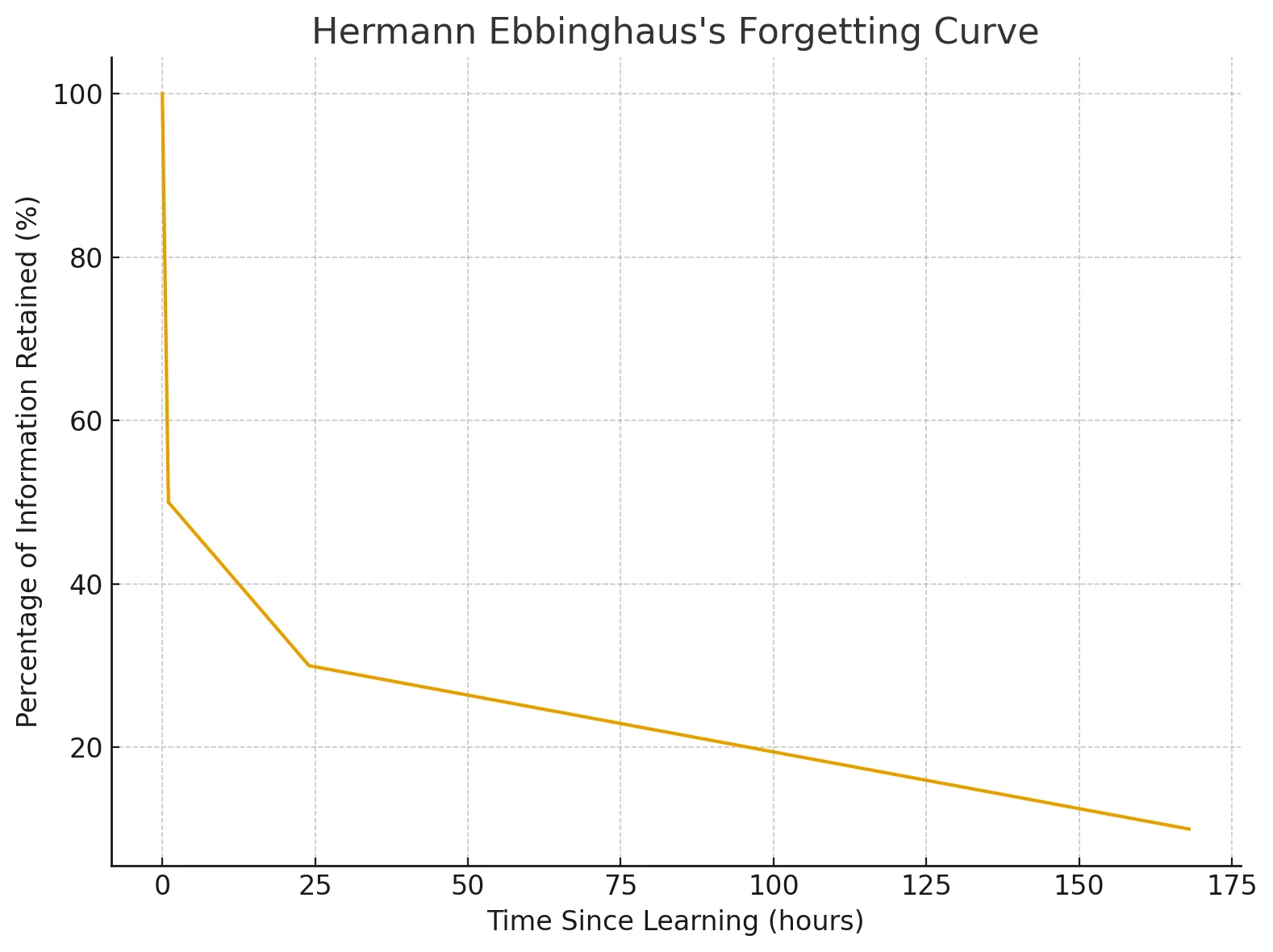
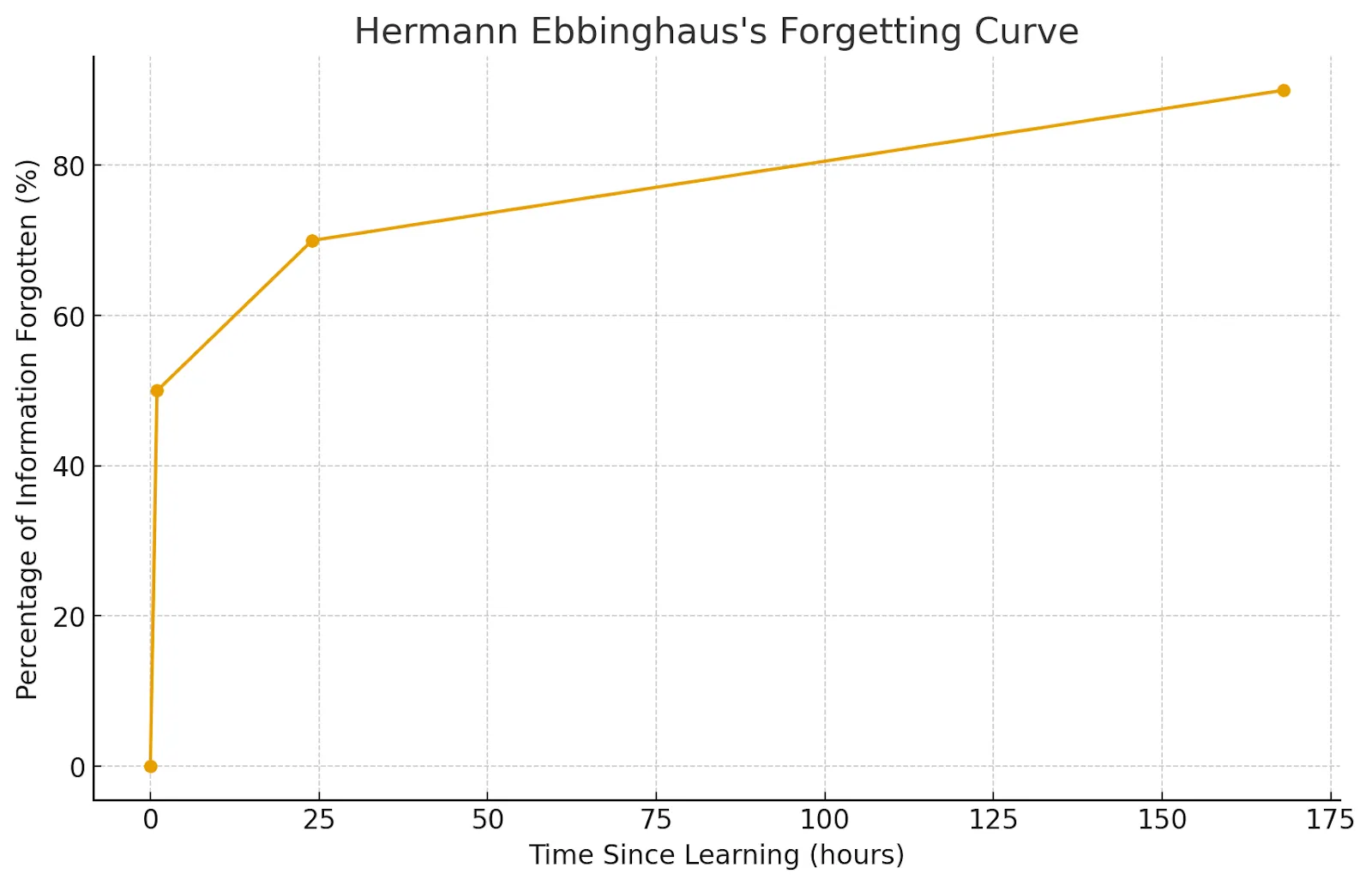
Here’s the uncomfortable truth: people forget approximately 70% of new information within 24 hours, regardless of its relevance. The events industry invests millions in creating memorable experiences, yet event professionals rarely account for one biological reality - humans forget.
What is the Science Behind this Forgetfulness?
In 1885, German psychologist Hermann Ebbinghaus discovered something that should concern every event professional today. Through rigorous experiments, he mapped what we now call “the forgetting curve”, a pattern that shows how quickly new information slips away.
Without strategic reinforcement, memories decay rapidly, no matter how powerful the initial experience is.
Why Does the Forgetting Curve Matter for Events?
Most events measure success by what happens during the event - attendance numbers, satisfaction scores, and social media engagement. But, it is important that success is measured by what sticks after as well.
The statistics show how 92% of event teams are focused on improved post-event attendee engagement, but most are still using the same old playbook: post-event surveys, follow-up emails, recorded sessions, and social media recaps.
The problem? These are passive, one-time touches that do nothing to combat the forgetting curve. A generic email gets ignored, a recording will be archived but never rewatched, and a survey captures feedback, not retention.
This outdated approach can result in a disconnect, which leads to:
- Lost ROI on event investments
- Weakened relationship-building after events
- Reduced conversion from lead generation events
Why Does This Matter More Than Ever for Event Organizers?
The memory problem is getting worse, not better. As people attend more events, it becomes harder for any single event to stand out and get their full attention. According to Bizzabo, 57% of event organizers saw increased attendance at in-person events. Every event they attend pushes the last one further into the fog of forgotten experiences.
Throw the hybrid and virtual fatigue into the mix, and attention spans have shortened even further. In this landscape, if attendees forget the event content within days, did the event really happen? Beyond just being together in a room, what lasting value was created?
What Actually Works When Fighting the Forgetting Curve
Knowledge retention isn't about working harder, but about working smarter with timing.
These three strategies can beat the forgetting curve:
- Immediate, actionable summaries: The first step to remembering is capturing the key point before it’s lost. Providing a clear, scannable summary as the speaker talks creates a powerful initial memory anchor.
- On-demand, organized access: Memory fails when information is hard to find. A centralized, searchable hub available post-event allows for review when the attendee wants to access it.
- Contextual reinforcement: Information sticks when it’s connected to a goal. When summaries are directly tied to an attendee’s specific sessions and interests, the content becomes relevant and far more memorable.
Attendees don’t need to remember everything from an event. Event organizers need to strategically reinforce what matters most, exactly when attendees’ brains need the reminder.
How Does AI Transform Event Impact?
This is where Rozie Synopsis transforms how events create lasting impact. Instead of hoping attendees remember, advanced platforms make sure they do, using the same neuroscience principles that power forgetting curve research.
Rozie Synopsis works intelligently and strategically to improve knowledge retention after the event.
Here's how it works:
- Real-time insight delivery: Generates text-based, branded summaries live on screen during a session, solving the immediate problem of information overload at multi-track events.
- On-Demand Knowledge Hub: Creates a searchable, centralized hub with all session summaries, key takeaways, and analytics that attendees can access whenever they want after the event.
- Community-led reinforcement: The hub includes forum-like discussion capabilities, allowing attendees to engage with content and each other through comments
- Access-based personalization: Attendees see a relevant content feed because the system gates access based on their registration pass or group, ensuring they aren’t overwhelmed by irrelevant sessions.
The transformation is profound. Events shift from one-time experiences to continuous learning journeys.
What Does This Mean for Event ROI?
In a crowded event marketplace, differentiation isn’t just about creating amazing experiences, but also about creating lasting impact. Organizations using retention strategies can show measurable ROI, build stronger behavior change, create deeper stakeholder relationships, and justify larger event budgets with proof of lasting value. It’s time to master the science of making memorable moments stick.
Rozie Synopsis is built on this exact premise - turning event experiences into lasting impact. This AI experience production platform doesn’t just help attendees remember events but also helps them apply what they learned while being connected to the event community, maximizing knowledge retention long after the event ends.
Ready to transform events from one-time experiences into continuous value engines? Discover how Rozie Synopsis can help create events that not only wow attendees in the moment but also impact them long-term.
