AI at Work: How Event Organizers Can Automate Insight Without Losing the Human Touch

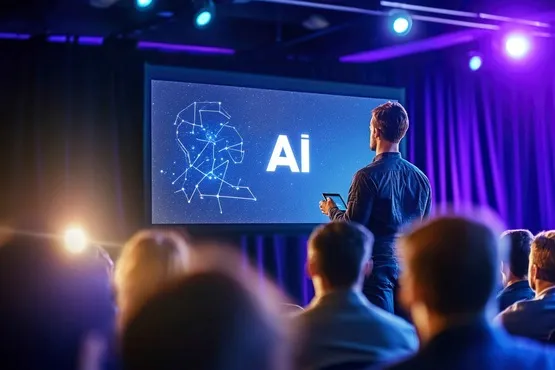
Event organizers face constant demands from stakeholders who want data-driven insights and measurable ROI, and attendees who expect authentic, human-centered experiences. A common misconception suggests that AI automation sacrifices the personal touch that makes live events memorable.
However, industry data reveals a different reality. According to Statista, 95% of meetings professionals believe AI will not cause job losses in their industry, but 50% recognize that upskilling will be essential. The technology serves as a tool for enhancement rather than replacement.
The real cost is not adopting AI in event management, but falling behind. While some organizers manually transcribe sessions and calculate data, competitors are already nurturing leads with personalized follow-up. Creating personalized follow-ups is essential because 78% of event attendees are more likely to do business with a company after their event, but only when it is timely and relevant.
Why Should AI Be Your Strategic Partner?
The best event organizers are not replacing humans with AI, but they are enhancing human capabilities. AI in event management excels at data capture, pattern recognition, and instant analysis, which frees event professionals to focus on relationship building, audience engagement, and creating memorable experiences.
Data shows that AI helps workers complete tasks 25.1% faster on average, with meeting follow-up and documentation showing the strongest improvements. When AI handles the repetitive and time-consuming work, your team can focus on strategic planning and meaningful attendee interactions.
Here’s what that looks like in action:
- Automated transcription captures every session accurately.
- Real-time engagement tracking monitors what resonates most.
- AI analytics convert raw data into actionable insights.
Together, these tools eliminate manual administrative tasks, allowing event organizers to focus on high-value activities that drive event success.
How Does AI Work During Events?
Real-Time Intelligence for Enhanced Presence
AI captures every insight, quote, and engagement metric, while the event organizer can observe audience reactions to different topics, make strategic introductions between attendees who share common interests, and solve problems in real-time. Being present with the attendees is what matters most for the event organizers.
What makes Follow-Up Actually Personal?
AI analyzes engagement patterns, session attendance, and interaction preferences, but humans craft the outreach strategy.
Post-event follow-up becomes genuinely personalized when attendees receive content based on sessions they attended, topics they engaged with, and connections they made.
For instance, an attendee who spent time at the sustainability panel does not want generic event highlights, they want deeper resources on the introduction to other initiatives that they might have missed. This results in the attendees feeling truly seen and valued.
How to Extend Event Impact?
The best events do not end when attendees leave the venue. AI-powered content hubs keep conversations alive long after the closing session.
With AI, attendees can:
- Revisit insights from sessions they attended.
- Access summaries and highlight reels.
- Continue learning through related topics.
This extended engagement transforms the conference into an ongoing learning experience and increases the event’s ROI by keeping the brand in mind for months after the conference.
What Makes Rozie Synopsis Different?
Rozie Synopsis redefines what AI can do in live, in-person events. The platform offers:
- Live transcription, translation, insights across multiple stages.
- Seamless brand and tone adaptation.
- Comprehensive knowledge hubs with summaries, insights, and trend reports.
The platform understands that every event has its own personality, voice and brand standards, and it adapts accordingly.
The platform allows event teams to maintain creative control and strategic direction while AI in event management handles data collection and analysis tasks. The team decides what matters, how to position content, and which relationships to prioritize.
The division of labor is simple yet powerful. Instead of spending days compiling data, teams gain back that time to plan improvements and nurture stronger partnerships.
Is AI Adoption Essential for Event Success?
Strategic AI implementation has shifted from an innovation to a competitive necessity. When AI handles data collection and analysis, event organizers can prioritize on what truly sets them apart - the human experience.
AI amplifies the role of organizers.. The technology provides data-driven insights that inform better decision making while preserving the human judgement, creativity, and relationship building skills that drive event success.
For organizations, it is no longer if AI should be part of their event strategy, but how. AI offers opportunities to create experiences that are both personalized and effective.
And this is where Rozie Synopsis comes in by helping event teams harness AI without losing their human edge. Request a demo of Rozie Synopsis today and discover how AI-powered live insights can amplify what makes your events special.
FAQs
1. How can AI enhance event management without replacing human creativity?
AI automates repetitive tasks like transcription and data analysis, allowing event organizers to focus on creativity, engagement, and building meaningful attendee relationships.
2. What are the main benefits of using AI during live events?
AI provides real-time transcription, engagement tracking, and instant analytics, helping organizers make informed decisions while staying fully present with attendees. Tools like Rozie Synopsis help elevate the live event experience through AI-powered transcription, translation, and insights.
3. How does AI make post-event follow-up more personalized?
AI analyzes attendee behavior, session choices, and engagement data to help organizers craft targeted follow-ups with relevant content and resources.
4. Why is AI adoption becoming essential for successful events?
AI-driven insights improve event ROI by reducing manual work, speeding up decision-making, and enabling more personalized attendee experiences. AI has also enabled event organizers to capture, monetize, and amplify event content at scale.
5. How can AI extend the impact of an event after it ends?
AI-powered content hubs such as those delivered by Rozie Synopsis keep conversations active post-event by curating insights, resources, and follow-ups that sustain engagement over time.
